
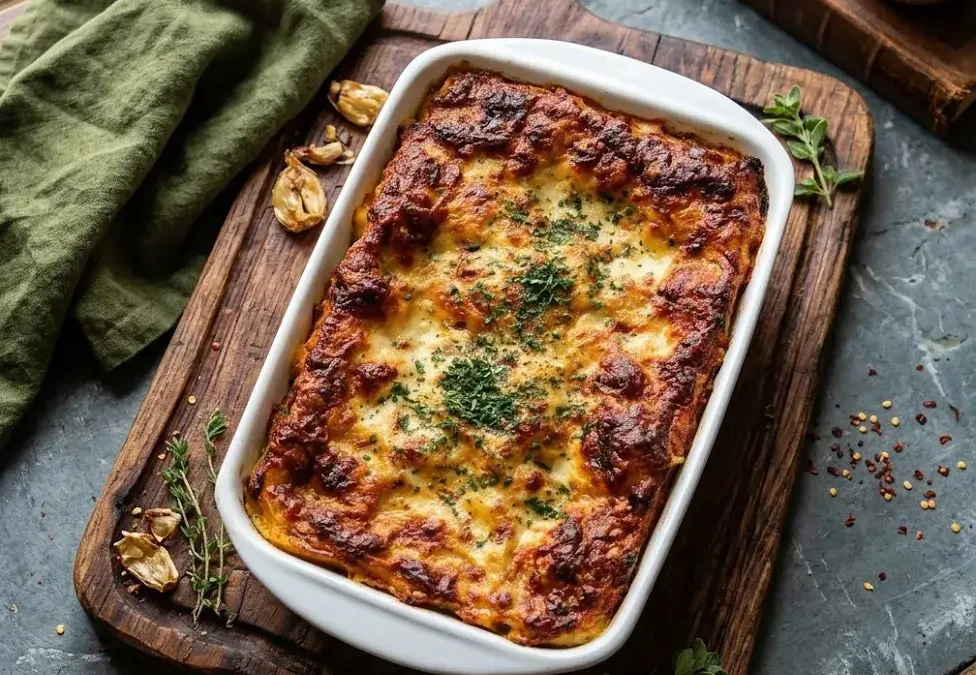
This Gordon Ramsay lasagne recipe gives you rich, savoury layers of beef ragu, creamy cheese sauce and soft pasta. A golden, bubbling crust sits on top. It goes from hob to table in 55 minutes. No faff. You need just 300g of mince, 6 lasagne sheets and a quick Cheddar sauce.
Ramsay cooks this dish in Episode 5 of his Midweek Meals series on YouTube. He makes every part from scratch, and the whole thing takes him less than an hour. His white sauce, called béchamel, uses the same method he teaches in his Ultimate Cookery Course. His advice is simple: “add the liquid very gradually, especially at the beginning.” Then whisk until each splash of milk has fully vanished before you add more. That’s how you get a smooth sauce with no lumps.
Here’s the clever bit. Ramsay grates the carrot and onion instead of chopping them. The fine shreds melt into the sauce as it simmers. You get their sweetness, but no lumpy bits. The ragu, which just means a slow-cooked meat sauce, turns thick and silky and coats every sheet of pasta. Fussy eaters won’t spot a single vegetable. Sneaky, and brilliant.
Give it a go this week, then leave a comment below and tell me how yours turned out.
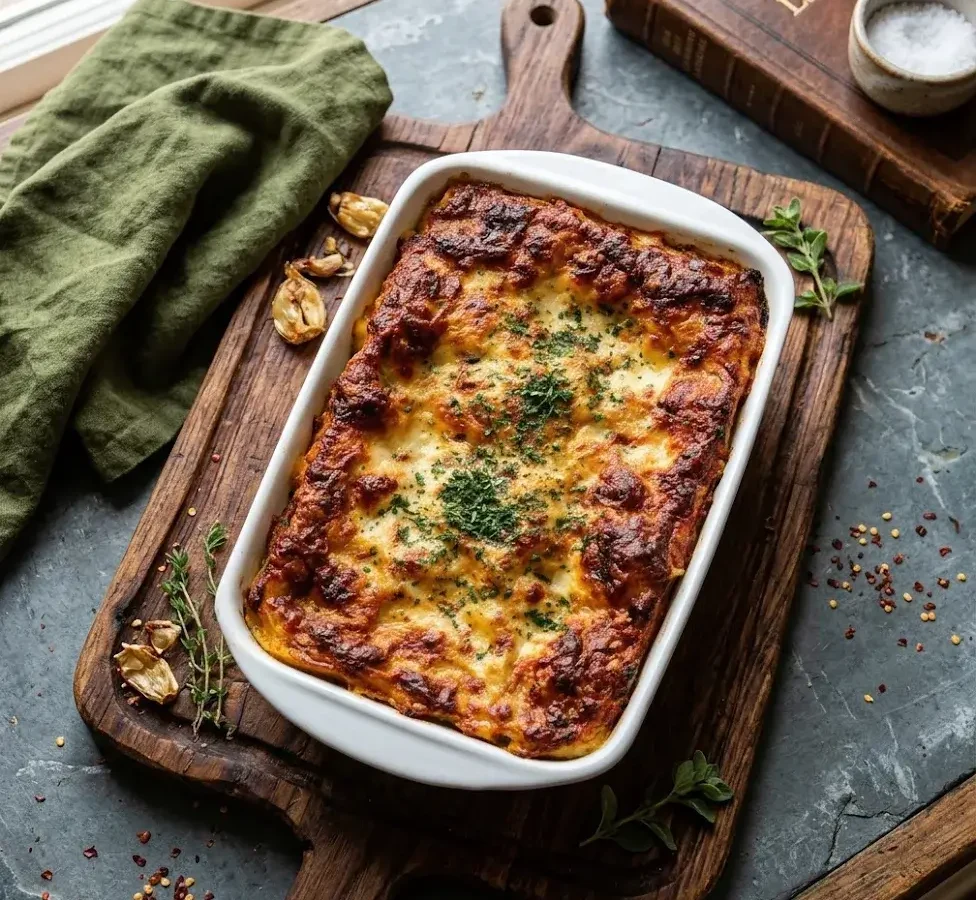
Gordon Ramsay Lasagne Recipe (Lasagne al Forno)
A quick weeknight lasagne made with 300g beef mince, 6 pasta sheets and a béchamel with Cheddar and Parmesan. There’s no pork and no ricotta, and it’s ready in 55 minutes.
🛒 Ingredients
Click to check off- For the meat sauce
- For the cheese sauce
- To assemble
- For the salad
👨🍳 Step-by-Step Method
-
Cook the veg
Set a large, deep pan on a medium hob and add the olive oil. Add the grated carrot, grated onion and garlic. Stir now and then for about 5 minutes. They’re ready when soft and just starting to colour. Season with salt and pepper.
-
Brown the mince
Push the veg to the sides and drop the mince into the middle. Sprinkle over the oregano. Leave it untouched for 30 seconds. Then break it up with a wooden spoon. Cook for 4–5 minutes, until no pink remains and the edges look brown.
-
Make the ragu
Stir in the tomato purée and Worcestershire sauce. Tuck in the bay leaf and splash in the red wine. Tip in the tomatoes and the 50ml milk, then mix. Let it bubble gently for 15–20 minutes. It’s done when your spoon leaves a clear trail across the pan. Take it off the heat.
-
Make a roux
Melt the butter in a second saucepan on a low-medium heat. Tip in the flour and stir it into a smooth paste. This paste is called a roux, and it thickens the sauce. Cook it for 1 minute to get rid of the raw flour taste.
-
Whisk in the milk
Pour in a third of the 300ml milk. Whisk hard until no lumps remain. Add the next third and whisk again. Add the last third. Keep whisking until the sauce coats the back of a spoon. Season with salt, pepper and the nutmeg, then cook for 1 minute more.
-
Add the cheese
Lift the pan off the heat. Stir in the Cheddar and Parmesan. Keep going until the sauce is glossy and fully melted.
-
Build the layers
Preheat the oven to 200°C (400°F/Gas 6). Spread half the ragu over the base of a baking dish. Cover it with half the lasagne sheets. Pour on a little under half the cheese sauce. Spoon over the rest of the ragu. Lay the remaining sheets on top. Finish with the rest of the cheese sauce, spreading it right to the edges.
-
Bake it
Scatter the extra Parmesan over the top. Add a pinch of oregano and a little seasoning. Bake for 30–35 minutes. Look for a deep golden top with sauce bubbling up at the sides.
-
Dress the salad
Whisk the mustard, vinegar and olive oil together in a bowl. Toss the lettuce leaves through just before serving.
-
Rest, then slice
Leave the lasagne to stand for 10 minutes. This lets the layers firm up, so each slice holds its shape. Serve with the salad on the side.
📝 Recipe Notes
Oven temperature: 200°C / 400°F / Gas mark 6. In a fan oven, drop it to around 180°C.
Handy tip: Use the fine side of your box grater for the carrot and onion. Finer shreds melt into the ragu faster, and that matters when it only simmers for 15–20 minutes.
Make It Ahead
You can build this lasagne up to a day early. Assemble it, let it cool, then cover the dish and chill it. Bake it straight from the fridge, but allow an extra 10–15 minutes. Check that it’s piping hot in the centre before serving.
You can also make just the ragu ahead. It keeps for 2 days in the fridge, and the flavour gets better overnight.
Storing and Freezing
Keep leftovers in a covered dish in the fridge for up to 3 days. Reheat single portions in the microwave, or warm the whole dish in the oven, covered with foil.
To freeze it, let the baked lasagne cool completely. Wrap it well, or cut it into portions first. It freezes for up to 3 months. Thaw it overnight in the fridge, then reheat until it’s steaming hot all the way through.
Easy Swaps
No red wine? Leave it out, or add a splash of beef stock instead.
Want it lighter? Use lean beef mince, or swap in turkey mince.
No Worcestershire sauce? A dash of soy sauce adds a similar savoury depth.
Gluten-free? Use gluten-free lasagne sheets and flour, and check your Worcestershire sauce label.
Common Mistakes to Avoid
Adding all the milk at once. You’ll get a lumpy sauce. Pour it in thirds and whisk well each time.
Leaving sheets uncovered. Dry pasta corners stay hard and crunchy. Make sure sauce covers every inch.
Cutting it straight from the oven. The layers slide apart. Give it the full 10-minute rest.
Skipping the browning. Pale mince means a flat-tasting sauce. Let it catch some colour first.

1 Comment